
Typhoons, cyclones and storms have proved to be more devastating than earthquakes as far as the loss of human life was concerned.

The paper said 65,130 people were killed in 3,175 incidents of floods. Some 40,358 people died in 117 tropical cyclones, with 344.9 deaths per mortality event. There were 706 heat wave incidents that claimed the lives of 17,362 people, the paper said, adding there is a rise in the number of casualties because of this type of EWE.
A recent study by IIT Kharagpur researchers reveals that powerful cyclones can significantly impact groundwater quality up to 100 metres below the surface in deep coastal aquifers. Conducted in the climate-vulnerable Sundarbans region, the research highlights how extreme weather events disturb the freshwater-seawater balance, threatening drinking water security and necessitating depth-specific groundwater management strategies.

A new study reveals that past emissions from major oil, gas, coal, and cement producers will continue to impact Earth's environment for centuries, even if emissions cease today. The research highlights that the planet will remain significantly warmer than pre-industrial levels, leading to persistent climate damages and increasing the likelihood of future extreme weather events, forming the basis for accountability lawsuits against these "carbon majors."

A recent study by scientists indicates that the Hindu Kush-Himalaya region is experiencing increased frequency and intensity of extreme weather events due to climate change, including rapid glacial melting and changing rainfall patterns. However, the research also cautions against solely blaming climate change, highlighting that human factors like population growth, commercial activities, and non-enforcement of regulations contribute significantly to the vulnerability and impact of these disasters. The study points out that many devastating floods originate from small glaciers and rain-fed streams, exacerbated by encroachment on unstable slopes and floodplains.
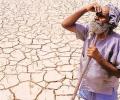
The death toll included over 450 from intense heat wave last summer, according to the World Meteorological Organization.

Researchers have outlined five crucial actions to help the world prepare for a potentially strongest-on-record El Nino, aiming to reduce its severe health consequences like infectious diseases, malnutrition, and heat-related conditions. These recommendations, published in The Lancet, emphasise a comprehensive risk overview and early preparatory measures.
A new study published in AGU Advances reveals that extreme heat events are becoming more frequent and expanding beyond traditional summer months globally. This expansion is asymmetric, occurring earlier in spring in regions like western Europe and northwestern India, and later into autumn in areas such as the western US and eastern China. Researchers highlight the challenges this poses for human acclimatisation and community preparedness, as existing infrastructure like cooling centres are built around historical summer calendars.

Climate scientist Tapio Schneider advocates for expanding early warning systems beyond rainfall events to include other disaster triggers like flash floods, citing the recent Nepal floods. He highlights the inevitability of 1.5 degrees Celsius global warming and discusses the role of advanced climate modelling and AI in improving predictions and research, particularly for regions like India.

A new study reveals that extreme climate hazards, typically associated with higher levels of global warming, could occur even under a moderate warming of 2 degrees Celsius, posing significant threats to food production, forests, and urban areas.

'It appears to be a combination: A glacier breaking away, and a dam-like formation downstream reaching capacity and releasing water suddenly.'

Japanese Olympic Committee chief Seiko Hashimoto acknowledged "many problems" at the Aichi-Nagoya Asian Games, particularly regarding accommodation, but emphasized that criticism doesn't reflect the full experience. She highlighted innovative solutions like cruise ship lodging as potential models for future cost-effective international competitions and stressed the importance of learning from challenges, including weather disruptions. Hashimoto also celebrated Japan's record medal haul at the Games.

India's race walk coach Ronald Weigel has urged national selectors to consider the extremely humid conditions during the National Inter-State Championships when picking the team for the upcoming Asian Games. He highlighted how tough weather significantly slows down endurance athletes and suggested holding future selection events in more favourable conditions like Bengaluru.

'The trigger for the flood was definitely natural, but the damage that it caused was human-made.'

Neeru Dhanda has made history by becoming the first Indian woman to win an individual trap shooting gold at the Asian Games, also setting a new continental record.
A new study projects that by the end of the century, hot days could experience an additional four hours of extreme heat, with low and middle-income countries being disproportionately affected. The research highlights that traditional daily temperature metrics often overlook shorter, intense periods of heat, and hourly assessments are crucial for effective heat risk management and public health planning in a warming climate.

Above-normal cold wave days are expected in some areas of central India, eastern Uttar Pradesh and Bihar during January 2026.

The International Cricket Council (ICC) has announced a series of changes to its Playing Conditions, effective from October 1, 2024, aimed at improving game pace, standardising ball specifications, and clarifying fielding rules. These updates include penalties for time-wasting batters, tighter ball tolerances for women's cricket, and a trial for pink balls in daytime Test matches.

Pakistan's Olympic gold medallist javelin thrower Arshad Nadeem has responded to social media criticism following his disappointing ninth-place finish at the recent Commonwealth Games in Glasgow. Nadeem attributed his poor performance to the extremely cold weather, which stiffened his muscles and hindered his throws. He emphasised his commitment to his country and his grounded nature, expressing confidence in his ability to return to winning form at the upcoming Athletissima event.

A new study reveals that approximately 70 per cent of the year-to-year variation in winter air pollution across northern India can be explained by the frequency of western disturbances. These storm systems, originating from the Mediterranean, help clear pollution through precipitation and ventilation. The findings suggest that predicting the frequency of these disturbances could provide advance warning of severe pollution, allowing for better preparedness and implementation of control measures.

From a few rain gauges in 1875 to rivalling the world's best weather agencies, the India Meteorological Department (IMD) has weathered its way to becoming a global leader in forecasting.

Olympic gold medallist Arshad Nadeem has expressed his disappointment over social media criticism following his poor performance at the Commonwealth Games in Glasgow. He attributed his ninth-place finish to the extremely cold weather affecting his javelin throws and affirmed his commitment to return to winning form, stressing his grounded nature despite fame.

World Earth Day 2026 is celebrated on April 22 to promote environmental protection. Know its history, significance, theme, inspiring quotes, and why it matters more than ever today.

Scientists discover tiny whirlpool-like swirls on the Sun that could explain solar activity, improve space weather research and solve a decades-old solar mystery.

The 13.153-km Zojila Tunnel, the world's longest single-tube bi-directional road tunnel at the highest altitude, and its final breakthrough will be a historic milestone in India's infrastructure history.

Washington Governor Bob Ferguson declared a statewide state of emergency and burn ban Saturday morning as an unprecedented wildfire crisis gripped the region, with active blazes scorching nearly 3,000 acres.

There is a strong opinion within the BJP in Punjab that the party must now stand on its own two feet and dump the badly compromised SAD baggage.

While recovery efforts are ongoing, the likelihood of recovery currently appears low.

Ladakh has inaugurated its first international-level artificial ice hockey rink, a state-of-the-art facility costing Rs 42 crore. Equipped with a 24x7 chilling system, it allows year-round training, overcoming the previous limitation of a short natural ice season. This development is expected to boost winter sports, nurture local talent, and promote sports tourism in the region.

A World Cup game between Paraguay and France in Philadelphia is at risk due to extreme heat and humidity, linked to climate change and fossil fuel use. A heat dome over the U.S. and Canada has pushed temperatures beyond safe play recommendations, raising concerns about player safety and future tournament scheduling.

The IMD has issued an orange alert for heatwave conditions in parts of Kerala, prompting authorities to urge caution. Maximum temperatures are expected to reach up to 41 degrees Celsius in some districts. Strict guidelines have been issued, including the suspension of vacation classes and rescheduling of working hours.
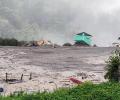
A new study identifies flash flood hotspots in India, highlighting the influence of land features, rainfall, and the growing impact of climate change.

India's peak power demand is projected to hit 270 GW this summer, surpassing last year's record of 250 GW.

Maharashtra Chief Minister Devendra Fadnavis has warned of a possible cloudburst-like spell in Nashik on Tuesday and stated that the state machinery is on high alert, with heavy rains expected to continue until July 8. Citizens are urged to avoid unnecessary travel as authorities manage landslides, swollen rivers, and rescue operations.

Opposition members strongly opposed the proposed legislation at the introduction stage and pressed for sending the bill to a parliamentary panel for greater scrutiny. The MPs, including Priyanka Gandhi of the Congress, strongly objected to the "removal" of Mahatma Gandhi's name.

The BCCI is considering advancing the Indian Premier League schedule to a March 10-May 15 window from next year to avoid extreme heat and pre-monsoon rains. This move aims to benefit players and fans, though the number of matches will remain at 74 due to international calendar constraints.

Ace Indian swimmer Sajan Prakash is set for his final season, targeting a podium finish and a personal best at the upcoming Commonwealth Games in Glasgow. Having qualified for both the CWG and Asian Games, Prakash is undergoing intensive training, focusing on recovery and strategic preparation with new coach Sandeep Sejwal, as he aims to make a significant impact in his last major international appearances.

A champions' mentality, a new generation of fearless players are some of the qualities that will have Saudi Arabia wary of the former champions in their upcoming Group H match on Sunday.

'What we are witnessing is not a freak incidence or a freak occurrence, but a new climate reality where warming oceans, monsoon variability and local geography are combining to produce extreme events.'

'Can you believe there are over 26,500 deaths linked to heatwave-driven ozone in 2024?'
